

I have been visiting the spectacular Western Australia wildflower displays since 2017, returning almost every year to explore and photograph the ever-changing landscapes of the state's Midwest. Throughout the annual wildflower season, millions of native wildflowers transform the countryside into one of Australia's most spectacular natural displays. No matter how many times I visit, I never tire of experiencing and photographing the incredible WA wildflower season.
It's easy to see why so many people travel from across Australia and around the world to experience the Western Australian wildflowers for themselves. Based on my years of exploring the region, this guide shares everything I've learnt along the way.
In this guide to Western Australia's wildflowers, you'll find everything you need to plan your trip, including the best places to see carpets of wildflowers in WA, the ideal time to visit during the WA wildflower season, and a suggested 4-day wildflower road trip itinerary to help you make the most of your visit.

Coalseam Conservation Park

Map Of Wildflower Locations.
More images can be seen in my Midwest Gallery and Wheatbelt Gallery.
Where to See the Best Wildflower Displays in Western Australia
If you're wondering where to see the best wildflower displays in Western Australia, the state's Midwest region is hard to beat. Located between 3-6 hours north of Perth, the inland semi-arid landscape between Moora, Mingenew, Mullewa, Yalgoo, and Paynes Find bursts into colour during the WA wildflower season, with millions of native wildflowers creating spectacular carpets across the landscape.
This region offers high concentrations of wildflowers within a reasonable driving distance of Perth, making it the perfect destination for a Western Australia wildflower road trip. From vibrant fields of everlastings, to orchids and flowering shrubs, every area offers something unique.
Some of the best places to explore include:
Camel Soak - Near Perenjori, this is one of the closest stops to Perth to see great displays of everlastings, also with free camping available.
Orchid Ridge - Not far from Camel Soak, home to an impressive variety of native orchids and the iconic wreath flower.
Koolanooka Springs - A short drive from Morowa, this free campsite offers excellent displays of yellow and white pom-pom everlastings (Cephalipterum drummondii).
Coalseam Conservation Park - The most popular and famous reserve on this list, known for its expansive carpets of everlastings displaying a range of different colours.
The Waterfalls at Mullewa - A very scenic location combining a seasonal waterfall amongst many types of everlasting wildflowers.
The roads between Yalgoo and Paynes Find - Depending on the season, this drive can provide some of the best roadside wildflower displays in Western Australia, with countless opportunities to stop and explore. As it is a bit further out, this area is often much quieter. Jokers Tunnel is another destination worth checking out if in the area, and you will see plenty of wildflowers on the way.

Colours of Coalseam Conservation Park

Pink Everlastings

Australian Bustard in the wildflowers.

Wildflowers Near Paynes Find

Wildflowers near Paynes Find

Wildflowers near Paynes Find

Wildflowers at Koolanooka Springs

WIldflowers near Morowa

Wildflowers near Perenjori

Wildflowers near Mullewa

Wildflowers near Paynes Find

Yellow Spider Orchid & Everlastings
Do You Need a 4WD to See Western Australia's Wildflowers?
One of the most common questions when planning a Western Australia wildflower road trip is whether a 4WD is required. The good news is that the wildflower locations mentioned in this guide are all accessible with a 2WD vehicle.
However, many of these locations are reached via unsealed gravel roads, which can vary significantly depending on recent weather conditions and road maintenance. After periods of heavy rainfall, some roads may become rough - with potholes, corrugations, or muddy sections creating challenges for smaller vehicles.
With careful driving, suitable weather conditions, and by checking current road conditions with local visitor centres before travelling, you should be able to access these Western Australia wildflower locations without needing a 4WD.
While a 4WD is not essential for visiting many of Western Australia's wildflower locations, it can provide greater comfort on rougher gravel roads and is required for accessing some more remote areas. For example, the Breakaway Loop in Karara Rangeland Park is only suitable for high-clearance 4WD vehicles.

Breakaways, Karara Rangeland Park.
When Is the Best Time to See Western Australia's Wildflowers?
The Western Australia wildflower season typically runs from June through to October, with the peak period generally occurring between July and mid-September. The exact timing can vary each year depending on rainfall and seasonal conditions, but for those hoping to see the famous carpets of everlastings in full bloom, early to mid-August is usually the best time to visit.
In most years, the second and third weeks of August provide some of the most spectacular wildflower displays across Western Australia's Midwest region. However, because wildflowers are entirely dependent on seasonal conditions, it can be difficult to perfectly time a trip when planning months in advance.
If you have the flexibility to organise your visit closer to the season, I recommend keeping an eye on updates from local visitor centres and Western Australia wildflower communities. These can provide valuable information on where flowers are blooming and help you plan a trip around the best displays for that particular year.
The quality and intensity of the WA wildflower season can also vary significantly from year to year. The best displays usually follow widespread rainfall across the Midwest and Wheatbelt regions of Western Australia during late autumn and mid-winter (May–July), followed by warmer, sunnier conditions through late July and August.
When the seasonal conditions are ideal, the landscape can transform into incredible carpets of colour. However, even in drier years, there are usually still wildflowers to discover. The displays may simply be more scattered or concentrated in fewer areas.
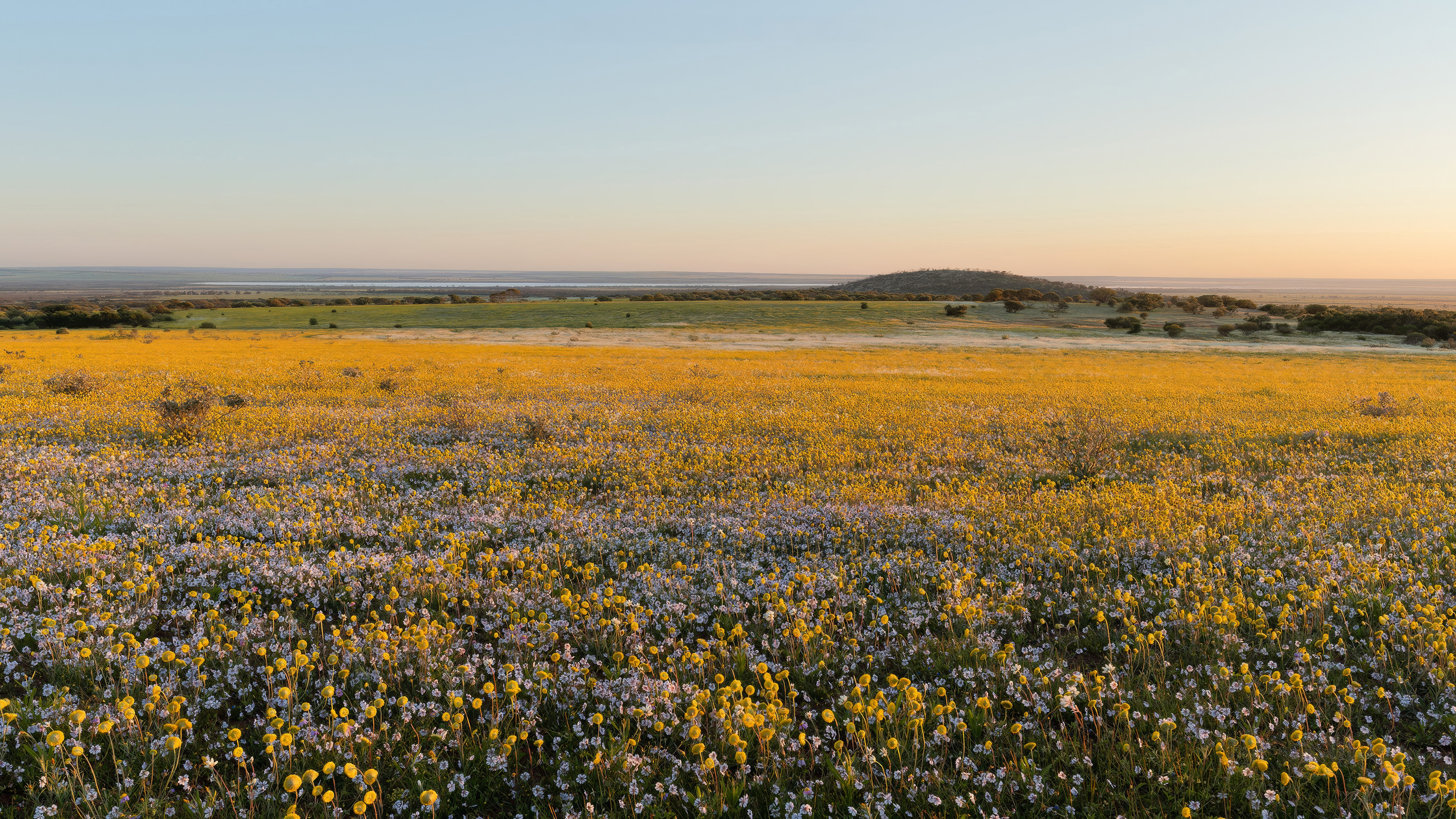
Fields of wildflowers in Australia's midwest.
Where to Stay When Visiting Western Australia's Wildflowers
One of the best ways to experience the incredible Western Australia wildflower season is by camping overnight and immersing yourself in the landscapes where these spectacular displays occur. The Midwest region has several free campsites near some of the best wildflower locations in WA, allowing you to wake up surrounded by nature, maximising your time exploring and photographing the flowers.
Some popular free camping options include:
Camel Soak - A great campsite with granite outcrops, everlastings, and orchids. Also a good base for exploring the surrounding wildflower areas.
Koolanooka Springs - A peaceful location right amongst one of the best wildflower viewing areas. Level sites are limited so arrive early.
Mullewa Waterfalls - A scenic campsite option combining some of the best wildflower viewing with a stunning seasonal waterfall.
These remote campsites are generally basic and require visitors to be fully self-sufficient, including bringing their own water, food, and camping supplies. Facilities are limited or unavailable, so preparation is essential.
For travellers who prefer more amenities, many towns throughout Western Australia's Midwest region offer caravan parks, cabins, and other accommodation options. Towns such as Mullewa, Mingenew, and Morowa provide convenient bases for exploring nearby wildflower locations. Coalseam Conservation Park also offers paid camping options within the park.
Keep in mind that the WA wildflower season is a popular time to visit, and campsites and accommodation can become very busy during peak bloom periods (especially throughout August). To secure your preferred spot, aim to arrive earlier in the day or book accommodation in advance where possible.

A lone tree amongst the masses of pom-pom everlastings & yellow everlastings.
4-Day Western Australia Wildflower Road Trip Itinerary
If you're looking to experience the best wildflower displays in Western Australia, this 4-day WA wildflower itinerary takes you through some of the Midwest's most spectacular locations. Starting and finishing in Perth, this route combines iconic wildflower hotspots, scenic camping locations, and excellent photography opportunities.
Before You Go: Protect Western Australia's Wildflowers
Western Australia's wildflower displays are one of the state's greatest natural treasures, and they can only be enjoyed by future visitors if we all do our part to protect them. Whether you're visiting to admire the flowers or photograph them, always stay on marked tracks and established paths wherever possible, and avoid walking through, sitting amongst, or picking wildflowers. Not only can this damage fragile plants and their surrounding habitat, but it is also illegal to pick native wildflowers in Western Australia without the appropriate permits.
You may have seen promotional photos or social media images of people appearing to walk or sit amongst carpets of wildflowers. While some of these images are simply taken from clever angles that make it look as though someone is standing in the flowers when they're actually on a track or bare patch of ground, others may show behaviour that should not be encouraged. Just because you've seen a similar image elsewhere doesn't mean it's acceptable or responsible.
As photographers, travellers, and nature lovers, we all have a responsibility to minimise our impact. A beautiful photo is never worth damaging the very landscape you've travelled to experience. I also believe tourism operators and destination marketing organisations have an important role to play by promoting responsible behaviour and avoiding imagery that could encourage visitors to trample sensitive wildflower displays in search of the perfect photograph.
With a little care and respect, we can help ensure Western Australia's spectacular wildflower displays continue to thrive for generations to come.
Day 1 – Perth to Camel Soak
Stay: Free camping at Camel Soak or accommodation in Perenjori
- Leave Perth early and drive approximately 4 hours to Perenjori.
- Stop at Orchid Ridge for your first taste of the Western Australia wildflower season, keeping a close eye on the roadside verges for the famous wreath flowers.
- Continue to Camel Soak, where you'll find beautiful granite outcrops surrounded by everlastings, orchids, and a variety of native wildflowers.
- Spend the afternoon and sunset exploring the area before camping overnight, or return to Perenjori for accommodation.

Pom-Pom Everlastings mixed with Capeweed near Perenjori.
Day 2 – Camel Soak to Koolanooka Springs
Stay: Free camping at Koolanooka Springs or accommodation in Morawa
Leave Camel Soak at your own pace before making the short drive to Morawa (approximately 1 hour).
Take time to explore the town before continuing to Koolanooka Springs.
Spend the afternoon and evening wandering through one of the Midwest's most picturesque wildflower locations, where vast displays of colourful everlastings bloom between two rocky hillsides.
Camp overnight at Koolanooka Springs or stay in nearby Morawa.

Rock Formations & Native Wildflowers at Koolanooka Springs.
Day 3 – Morawa, Mingenew & Coalseam Conservation Park
Stay: Paid camping at Coalseam Conservation Park or accommodation in Mingenew
After packing up, travel to Mingenew, an ideal place to stop for supplies before continuing your journey.
Drive approximately 30 minutes to Coalseam Conservation Park, one of the best places to see wildflowers in Western Australia.
Spend the day exploring the park's walking trails, where you'll find spectacular carpets of everlastings alongside a diverse range of native wildflowers and orchids. Keep an eye out for the beautiful spider orchids hidden amongst the vegetation.
If time permits, I highly recommend completing the Plateau Loop Trail, one of my favourite walks in the park.
Stay overnight at one of Coalseam's paid campsites or return to Mingenew for accommodation.

Roadside Pom-Pom Everlastings on the way to Morowa.
Day 4 – Coalseam Conservation Park to Perth
Begin the approximately 4.5-hour drive back to Perth.
Break up the journey with a stop at Candy's Bush Reserve near Moora, one of the best places to see native orchids during the WA wildflower season.
Continue back to Perth, finishing an unforgettable four-day journey through Western Australia's spectacular wildflower country.
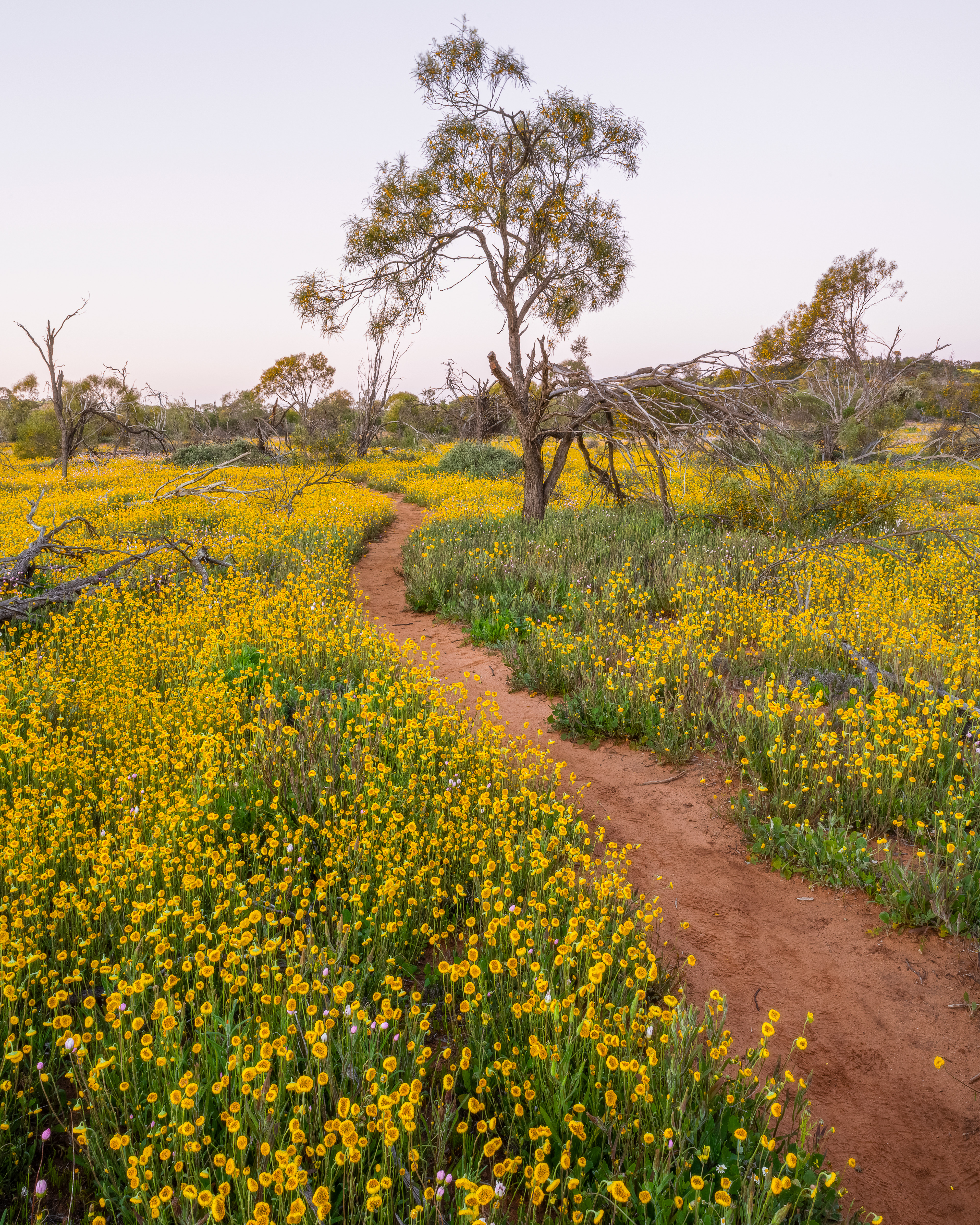
Walking trail in Coalseam Conservation Park.

Additional Wildflower Hot Spots Near Perth
If a trip to Western Australia's Midwest isn't possible this WA wildflower season, don't worry. There are still plenty of fantastic places to see wildflowers near Perth. While these locations don't feature the vast carpets of everlastings found further north, they offer beautiful displays of native wildflowers and make excellent half, or full-day trips from the city.
Two of my favourite wildflower locations near Perth are:
Lions Lookout (Perth Hills) - One of the best places to see masses of flowering verticordia in many different colours, with early October typically providing the best displays.
Pelham Lookout & Reserve (Toodyay) - A fantastic day trip from Perth, particularly around mid-September, when patches of vibrant pink everlasting daisies bloom across the reserve.
If you're short on time or visiting Perth outside the peak Midwest flowering period, these locations provide a wonderful opportunity to experience the beauty of Western Australia's wildflowers without travelling hundreds of kilometres from the city.
Thanks for reading!
More wildflower images can be seen in my Wheatbelt, Gascoyne & Midwest, and Perth & Surrounds Galleries
All of the images here are available for prints & licensing.

If this guide has assisted or inspired you in any way, consider supporting my work with a small contribution, perhaps equal to the cost of a cup of coffee. Your support helps me cover essential travel expenses like fuel and vehicle maintenance, enabling me to continue exploring and sharing Australia’s natural beauty with you and others.
You can also learn photography online whilst showing support via Patreon.
You can also learn photography online whilst showing support via Patreon.
Thank you for being part of this journey. Every little bit truly makes a difference!